
From Start-up to Global Markets:
Scaling Up Europe's Future Champions
- September 1, 2025 @ 9:30
- IEDC-Bled School of Management, Slovenia
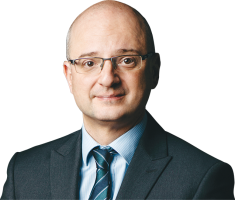
Igor Rudan
Igor Rudan is a Professor at the University of Edinburgh and Chair in International Health and Molecular Medicine. He is the Joint Director of the Centre for Global Health Research and the WHO Collaborating Centre at the Usher Institute at the University of Edinburgh, UK. Since 2024 he is also a visiting professor at Oxford University’s Nuffield Department of Primary Care Health Sciences and Green Templeton College.
He graduated from the University of Zagreb Medical School, Croatia, in 1995. He obtained two Masters Degrees and two Ph.D. degrees - in Anthropology (1997), Epidemiology (1999); Public Health (1998), and Genetic Epidemiology (2005). He published more than 700 research papers and 15 books/monographs, which have received more than 280,000 citations to date. In 2007, he was the researcher with the greatest increase in the number of citations in the world within his field, and included in the Web of Science/Clarivate “World’s Most Influential Scientific Minds / Highly Cited Researchers” (2015–2024).
He has led 34 research grants totaling more than GBP 40 million. He founded the Croatian Biobank “10001 Dalmatians” (in 2001) in isolated populations of Croatian islands in Dalmatia region, which contributed to the discovery of the biomedical role for more than 2,000 human genes to date. In his international health efforts to reduce global child mortality, he served as a consultant of the World Health Organization, UNICEF, The Bill and Melinda Gates Foundation, The World Bank, Save the Children, and others. He developed the “CHNRI” methodology (in 2007) and EQUIST tool (in 2012) that have been widely used by international agencies to prioritise investments in global health research and development.
He founded or co-founded Croatian Centre for Global Health at the University of Split, Croatia (2008), Edinburgh University Global Health Society (2011), “Journal of Global Health” (2011; co-Editor-in-Chief), WHO’s Collaborating Centre for Population Health Research, and Training in Edinburgh (2013), Centre for Global Health at the Usher Institute (2015) and the International Society of Global Health (2019).
He has been awarded >30 national and international research awards and professional recognitions, including the Wellcome Trust’s International Research Development Award (2002), “Scientist of the Year” Award from The Croatian Parliament (2005), Visiting Professorship for Senior International Researchers from the Chinese Academy of Sciences (2012), Chancellor’s Award for Research (2012) and Principal’s Medal for Outstanding service from The University of Edinburgh (2019). He was elected to the Royal Society of Edinburgh (FRSE) in 2016, Academia Europea (MAE) in 2022, and European Academy of Sciences and Arts (MEASA) in 2023. He received Mary Sommerville’s Medal from the Royal Society of Edinburgh as EAVE II team member. He was listed among “Croatian Persons of the Year” in 2016 and 2020, and among the "100 most powerful Croatians" from 2017-2019. He was declared "Scientist of the Year" globally in 2022 by Research.com.
He wrote >250 newspaper columns on popular science and published five national bestselling books in Croatia; one of them – “Evil Air: A Story of Medicine” – is now translated to 10 languages. In 2017 he released a documentary series “Survival: The Story of Global Health” which was broadcasted at the Croatian National TV and seen by more than 1 million people cumulatively, and more than 100,000 on YouTube. During the COVID-19 pandemic, his Centre for Global Health advised several governments and his columns on the pandemic were followed by more than 3 million people in eight countries. He is both a Croatian and a British citizen.